 bg
bg
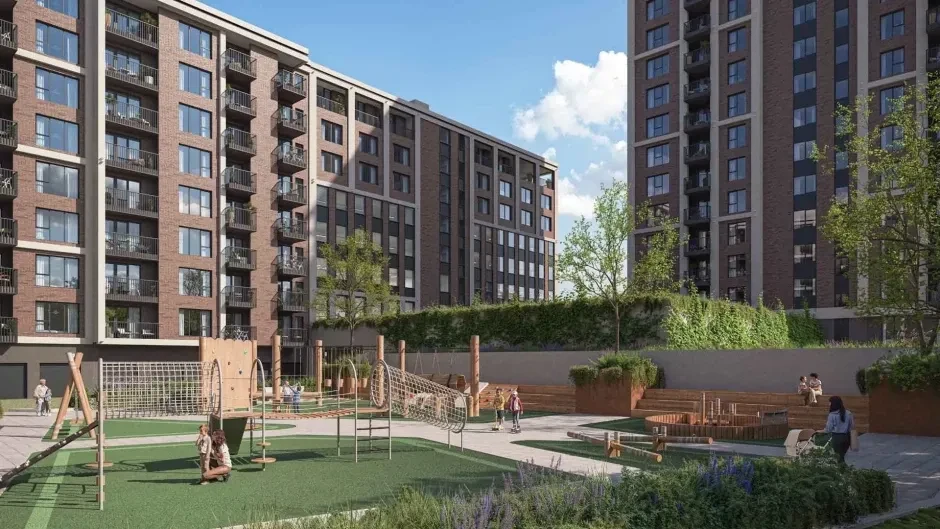
The expected price shock from the currency change did not materialise, but several quieter changes now affect every buyer looking for an apartment in Sofia or Burgas. The Bulgarian lev was replaced at a fixed rate, interest rates became more closely tied to the European cycle, and demand remained focused on quality new construction.
This article brings together what actually changed, where prices stand, how mortgage conditions are moving and what decisions buyers should make before the end of the year. The figures below are indicative market ranges and vary by district, floor, orientation and completion stage, but they give a realistic starting point for comparison. The aim is simple: a buyer should enter negotiations with clear expectations, not with market myths from two years ago.
What actually changed on 1 January 2026
The change was monetary, not price-based. From 1 January 2026, Bulgaria became part of the euro area and the euro became the official national currency. Property prices were not recalculated upwards because the conversion took place at a pre-announced fixed rate, not at a market valuation. This distinction matters, because in late 2025 many buyers feared that the currency switch alone would make apartments more expensive. That fear did not prove true.
The fixed conversion rate and why prices did not rise because of the switch
The Bulgarian lev was converted at the official fixed rate of BGN 1.95583 for EUR 1. This is the same relationship under which the currency board operated for more than two decades. In practice, an apartment priced at EUR 200,000 costs exactly the same as its previous equivalent in BGN. For the local buyer, the real price does not change because of the currency. For the foreign buyer, conversion costs and currency risk disappear, making entry into the market more predictable.
Dual price display until 8 August 2026
Until 8 August 2026, prices are displayed simultaneously in euro and BGN in listings, contracts and notarial deeds. Dual price display means the buyer sees the same amount in both currencies and can check the conversion without a calculator. The short period in which both currencies were legal tender ended at the end of January, but the obligation to display prices in both currencies remains until 8 August 2026. For property purchases, this is practical: the amounts in the preliminary contract, notarial deed and bank transfer can be checked in both currencies, reducing the risk of errors in large payments.
What buyers should check in the documents
In any 2026 transaction, it makes sense to verify that all amounts in the preliminary contract, deposit receipts and final notarial deed are converted at the fixed rate. A mismatch between the listed price and the contractual amount is a signal to ask more questions. A clean transaction with the developer usually presents prices transparently in both currencies from the beginning of the negotiation process.
Property prices in Sofia in 2026: where the market is moving
Growth has slowed, but it has not stopped. According to market data, asking prices for apartments in Sofia are around and above EUR 2,700 per square metre, while annual price growth in the largest cities is expected to remain in single digits, roughly in the 5-8% range. That is considerably more moderate than the sharp double-digit increases seen in previous years. The market is moving from overheating toward a more mature rhythm, where the quality of the specific property matters more than the general wave of demand.
New construction by district
In Sofia's southern districts, new construction often exceeds EUR 3,000 per square metre, while in more mainstream neighbourhoods levels are usually between EUR 2,200 and EUR 2,800. The difference comes from location, building class, orientation and the availability of parking. A buyer comparing two offers should look not only at the price per square metre, but also at net area and the share of common parts, because they change the real value of the home.
Why the centre holds its value
Central zones remain the most resilient because the supply of new buildings there is limited. Empty plots are rare, and every new project competes for a scarce location. This is why an apartment under construction in the centre usually preserves value better than a home in an area with many parallel developments. Buyers considering this type of purchase can review upcoming developments in central Sofia to compare buildings, stages and timelines before committing.
Buyers with mortgages and cash buyers
Low mortgage rates brought financed buyers back into the market after a period in which they often stepped aside for cash buyers. This broadens demand in the mid-market segment and supports prices in districts with good infrastructure. In the higher segment, cash transactions remain more common, because buyers there are less dependent on bank financing.
Burgas and the coast: a separate market rhythm
The coastal city follows its own rhythm. According to market data, the average price per square metre in Burgas is around EUR 1,750-1,800, while the average property value is close to EUR 168,000. This is significantly below Sofia levels and makes the entry point more accessible. Burgas is moving into a more balanced phase after the strong growth of previous years and offers a calmer environment for a calculated buyer.
Average levels and seasonality
Demand in Burgas has a clear summer peak, when interest in second homes and rental property increases. This separates the coastal market from Sofia, where transactions are more evenly spread across the year. For investors, seasonality is an opportunity, but it requires a careful view of the rental yield and liquidity of an apartment in Burgas, because summer rental income should not be projected mechanically across the whole year.
Which neighbourhoods attract demand
Neighbourhoods close to the sea and the centre concentrate the strongest interest because they combine everyday convenience with rental potential. Buyers value proximity to the Sea Garden, the beach and main transport routes. A detailed review of neighbourhoods and prices for new construction in Burgas helps compare specific areas by price, infrastructure and potential for future appreciation.
Mortgage rates after euro adoption
Rates remain low, but they now depend more directly on the European Central Bank. After Bulgaria's entry into the euro area, mortgage conditions are anchored to ECB decisions and euro market indices. This makes interest-rate movement more predictable, but also more closely tied to the European interest-rate cycle than in the years of a separate national monetary framework.
What the statistics show
The average interest rate on new housing loans is around 2.5%, while the annual percentage rate of charge is close to 2.8%. The annual percentage rate of charge, or APRC, includes not only the interest rate but also loan fees, which makes it the more honest metric when comparing banks. Regulatory limits keep the debt-service-to-income ratio up to 50%, while the maximum mortgage term is 30 years, protecting borrowers from excessive indebtedness.
Fixed versus variable rate
The choice depends on whether the buyer values predictability or expects future rate cuts. A fixed rate for the first years keeps the monthly payment stable and makes household budgeting easier. A variable rate follows the market and can start from a lower level, but it brings risk if rates rise. When buying new construction, the property insurance required by the bank should also be included in the monthly cost.
Why demand is shifting toward new construction
For a third consecutive year, buyers prefer new homes. Interest in buildings where nobody has lived before remains high in 2026. The reasons are practical: lower maintenance expenses, modern infrastructure, construction warranties from the developer and a cleaner transaction from the original source.
Energy efficiency and monthly bills
New buildings are designed under current energy-efficiency requirements, which directly affects monthly heating and cooling costs. A high energy class means lower consumption at the same comfort level. The difference compared with an older home accumulates over years and can offset part of the higher initial price, especially in a period of rising energy costs.
Document clarity when buying from the developer
Buying directly from the developer saves commission and gives access to the full building documentation at the source. The buyer can see construction documents, floor plans and deadlines without an intermediary. Before setting the budget, it is worth reviewing the budget for buying property after euro adoption, so all related costs are included, not only the apartment price.
Maintenance, warranty and long-term cost
New construction comes with builder warranties for the structure, installations and finishing works, protecting the buyer from early and expensive repairs. An older home at a similar price often hides deferred costs such as replacement of installations, windows or roof elements. When the calculation is made over the full period of ownership, the new building usually wins through lower running costs and more predictable maintenance fees.
Foreign buyers and the common European market
The euro removed one barrier for foreign buyers. Without conversion and currency risk, Bulgaria becomes easier to understand for buyers from the euro area who evaluate property directly in euro. For Sofia, this means stronger interest in central and southern locations. For Burgas, it means more attention to coastal properties for holidays and seasonal rentals. Foreign buyers compare price levels with other European cities and often find the Bulgarian market more accessible at a similar new-build quality level.
This interest is not evenly distributed. It concentrates in projects with clear documentation, a recognisable developer and a location that is easy to understand. Buildings with good reputation and transparent terms attract both local and foreign buyers, while anonymous projects in peripheral areas remain mainly dependent on domestic demand.
Common mistakes when buying in 2026
A more balanced market punishes carelessness. When pressure decreases, buyers sometimes relax and skip checks that felt mandatory during the overheated years. Several mistakes repeat often and can become expensive.
Comparing only by price per square metre
Price per square metre can mislead when it does not account for the share of common parts, orientation and floor. An apartment with a lower listed price may be more expensive per usable square metre. The real comparison is based on net usable area and expected monthly costs, not just the first number in the listing.
Ignoring the developer and deadlines
Buyers sometimes fall in love with the layout and forget to check who is building the project and what experience stands behind it. The developer's reputation, delivered timelines on previous projects and clarity of the contract matter more than an attractive interior visualisation. A reliable builder protects value and reduces stress before completion.
Underestimating additional costs
The apartment price is not the final cost. Notary fees, local transfer tax, furnishing and a reserve for unexpected items add a meaningful amount to the budget. A buyer who plans only for the apartment price risks running short of funds exactly when moving in. A realistic budget includes all of these items from the start.
One buyer per property: a more balanced market
Buyer pressure is easing. In 2026, the market is normalising: instead of several competing buyers, one property increasingly attracts one serious buyer. This returns part of the negotiating power to the buyer and leaves more time for viewing, comparison and a calm decision, without the feeling that the offer will disappear within hours.
For sellers, this means more realistic pricing. For buyers, it opens room to negotiate completion deadlines, payment structure or additional fit-out. A balanced market rewards the prepared buyer who knows what they want and has pre-approved financing.
Property as protection for savings
Property remains a preferred way to preserve value. After the transition to the euro, part of household savings continues to look for an asset with more tangible value than a bank deposit. A quality home in a strong location combines potential appreciation with rental income, making it a resilient choice in uncertain periods.
Not every property protects value equally. Location, construction class and the developer's reputation are decisive. In the higher segment, it is worth understanding the criteria for value in luxury properties, because they separate a home that appreciates from one that merely holds its price.
Expectations for the market until the end of 2026
The outlook is for a moderate but stable market. Forecasts point to single-digit price growth, steady demand for new construction and low mortgage rates as long as the ECB does not change direction. Dual price display remains in force until 8 August 2026, after which the mandatory parallel display in BGN ends and euro remains the only currency reference in offers and documents. For buyers, this is a period with less speculative pressure and more predictability than during the years of sharp increases.
Risks have not disappeared. Locations with excessive supply may see weaker growth, while projects without clear deadlines and documentation carry more uncertainty. That is why the choice of building and developer now matters more than the general market direction.
Steps for buyers in 2026
Preparation decides the deal. A balanced market gives buyers time, but it does not forgive rushed decisions. These steps help keep the purchase clean and predictable:
· Set a realistic budget including notary fees, local tax, furnishing and a reserve for unexpected expenses.
· Compare net usable area, not only price per square metre, because common parts change the real value.
· Check the energy class and expected monthly costs, not only the interior and layout.
· Request the full building documentation and completion schedule directly from the developer.
· Arrange financing in advance, because pre-approved credit gives real negotiating strength.
The property market after the euro in short
The euro did not overturn the property market. It made it more transparent. Prices are rising more moderately, mortgage rates remain low and anchored to the ECB, and demand continues to focus on quality new construction. Sofia holds high levels because central supply is limited, while Burgas offers a more accessible entry point with visible seasonality. For buyers in 2026, speed is not what wins. Preparation wins: a clear budget, comparison by real area and a transaction with transparent documentation from a developer who can be trusted.

Vladimir Kolev is the CEO of TV Property and an entrepreneur in the field of residential and investment properties. He graduated in Economics and Mathematics from the University of Bath and Sofia University and has practical experience in the development of distinguished residential projects in Sofia and along the Black Sea coast.