 bg
bg
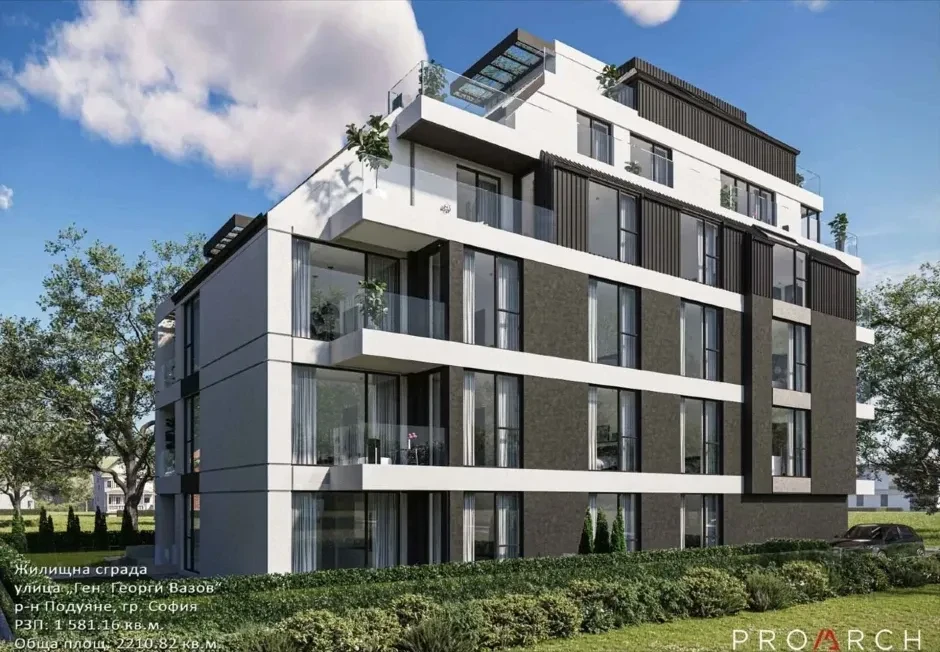
For the real estate market, the change goes beyond simple redenomination. It affects mortgage interest rates, tax calculations, notary fees, staged payment logic for new-build properties, and foreign buyers' access to the Bulgarian market. Here is what the eurozone concretely means for the buyer's budget, with examples from central Sofia and central Burgas and a focus on the advantages of buying directly from a developer.
What the euro changed in practice for property purchases
The fixed exchange rate of 1.95583 BGN to 1 EUR had been in place for over twenty years. Joining the eurozone eliminated the final conversion step and freed buyers from currency risk, which, although theoretical under a fixed rate, created a psychological barrier, especially for people with income from abroad. More importantly, transaction costs decreased. There are no more bank commissions for currency exchange, no bid-ask spread, and no need for conversion on intra-eurozone bank transfers.
For developers selling directly, the change is also positive. Price lists are in a single currency without dual pricing. Staged payment calculations are more transparent because both parties work with the same unit. When buying through a broker, the commission of 2 to 3.6 percent is also calculated in euros, making it easier to compare offers from different agencies and developers.
The transition period and dual pricing
During the first six months after euro adoption, retail prices were displayed simultaneously in leva and euros. In the property market, however, the transition was nearly imperceptible, as most new-build listings had already been quoted in euros. Buyers should know that pre-existing contracts denominated in leva were automatically converted at the fixed rate. There is no basis for recalculation or additional payment due to the currency change.
Mortgage interest rates after eurozone accession
One of the most tangible consequences for buyers is the change in mortgage interest rates. Before eurozone entry, the average housing loan rate in Bulgaria was around 2.5 to 3.5 percent annually. After accession, the ECB base rate became directly applicable. Bulgarian banks adjusted their terms, with some offering products tied directly to EURIBOR. Fixed rates for the first 3 to 5 years range from 2.8 to 3.8 percent, while floating rates are between 2.5 and 3.5 percent.
For a loan of 150,000 euros over 25 years, a 0.5 percentage point difference in the rate translates to savings of approximately 12,000 euros over the life of the loan. Apply to at least two banks and compare the Annual Percentage Rate of Charge (APRC), not just the interest rate. The APRC includes all fees, commissions, and insurance and provides a more accurate picture of the real cost of the loan. For a detailed analysis, see mortgage rates in Bulgaria for 2026.
Refinancing old loans after eurozone entry
Buyers who took out a mortgage before 2026 at a higher rate may consider refinancing. After euro adoption, terms at some banks are more favourable, especially for loans exceeding 100,000 euros. Before taking this step, calculate the early repayment fee (typically 1 percent of the balance in the first year) and compare total savings against the costs of the new loan, including fees for establishing a new mortgage, property valuation, and notarial expenses. If net savings exceed 3,000 euros, refinancing is justified.
Budget for a one-bedroom apartment in central Sofia
The average price of new-build property in central Sofia for 2026 is 2,200 to 3,200 euros per square metre. For a typical one-bedroom apartment with 65 sqm net area and approximately 78 sqm gross area, the price falls between 171,600 and 249,600 euros. Add the local transfer tax of 3 percent (5,148 to 7,488 euros), notary fee (800 to 1,500 euros), registration fee of 0.1 percent (172 to 250 euros), and legal fees (300 to 500 euros).
Total purchase cost: between 178,020 and 259,338 euros. With a mortgage at 20 percent down payment, the loan is between 142,416 and 207,470 euros. Monthly instalment over 25 years at 3.2 percent interest: 690 to 1,005 euros. These figures are for a direct purchase from the developer, without a brokerage commission. Buying through an agency adds 2 to 3.6 percent, or 3,432 to 8,986 euros extra.
Budget for a one-bedroom apartment in central Burgas
In central Burgas, new-build prices range from 1,600 to 2,400 euros per square metre. For a one-bedroom with 65 sqm net area: 104,000 to 156,000 euros. With additional costs (2.5 percent transfer tax in Burgas, notary, registration, legal): 108,160 to 162,240 euros total.
With a mortgage at 20 percent down, the loan is 86,528 to 129,792 euros, and the monthly instalment over 25 years at 3.2 percent is 419 to 629 euros. The difference compared to Sofia is significant. For the budget of a Sofia one-bedroom, a buyer can purchase a two-bedroom apartment in a good Burgas location. For a comparison of rental yields in central Sofia, see the rental yield analysis for 2026.
VAT on new-build property
When buying from a VAT-registered developer, the 20 percent VAT is usually included in the listed price. But not always. Some developers list prices excluding VAT, which means a 20 percent surcharge on top. The difference is significant: a listed price of 150,000 euros excluding VAT means a real cost of 180,000 euros. Always ask explicitly whether the price includes or excludes VAT. At reputable developers such as TV Property, pricing is transparent and clearly stated from the first contact.
Foreign buyers after eurozone entry
After Bulgaria's eurozone accession, interest from foreign buyers has increased noticeably. Currency risk has been eliminated, bank transfers are within SEPA (free or with a minimal fee of 0.20 euros), and Bulgarian price levels remain significantly below Western Europe. A one-bedroom in central Sofia costs the same as a studio in Munich, Vienna, or Amsterdam.
Pikadili Residence in central Burgas is already attracting interest from buyers in Germany, Austria, and the Netherlands, drawn by the combination of coastal climate, low entry price, and rental income potential from tourist lettings.
Tax advantages for foreign property owners
Bulgaria's property tax regime is among the lowest in the EU. Annual property tax is 0.1 to 0.45 percent of the assessed value, which for a one-bedroom apartment with a 150,000 euro market value means 80 to 350 euros per year. Tax on rental income is 10 percent for individuals with a 10 percent standard expense deduction. For foreign investors, these figures are attractive compared to most Western European countries where rental income tax reaches 30 to 50 percent.
Direct purchase vs. agency purchase in euros
A concrete comparison for a one-bedroom with 65 sqm net area in central Sofia at 2,500 euros per sqm:
Direct purchase from developer: Price with VAT: 162,500 euros. Additional costs (tax, notary, legal): 8,450 euros. Total: 170,950 euros.
Purchase through agency: Price: 162,500 euros. Commission 3 percent: 4,875 euros. Additional costs: 8,450 euros. Total: 175,825 euros.
Difference: 4,875 euros. With a mortgage, this amount increases further because you pay interest on the financed commission. Over 25 years at 3.2 percent, the 4,875 euros becomes over 7,000 euros in real cost.
Market outlook to the end of 2026
The first months after euro adoption confirmed expectations of moderate price growth. In central Sofia, annual growth is 3 to 5 percent; in central Burgas, 4 to 7 percent. The drivers are structural: limited land supply, rising construction costs, stable demand, and the new post-eurozone factor of easier access for foreign capital.
For buyers considering a property purchase in central Sofia or Burgas, the current moment is balanced. Interest rates are at manageable levels, prices are rising but not jumping sharply, and the supply of quality new-build is sufficient to provide genuine choice. Delaying a purchase by 12 months at 5 percent annual growth means 8,000 to 13,000 euros more for a one-bedroom apartment. Browse current listings from TV Property and contact the team for a personalised calculation based on your budget and financial goals.
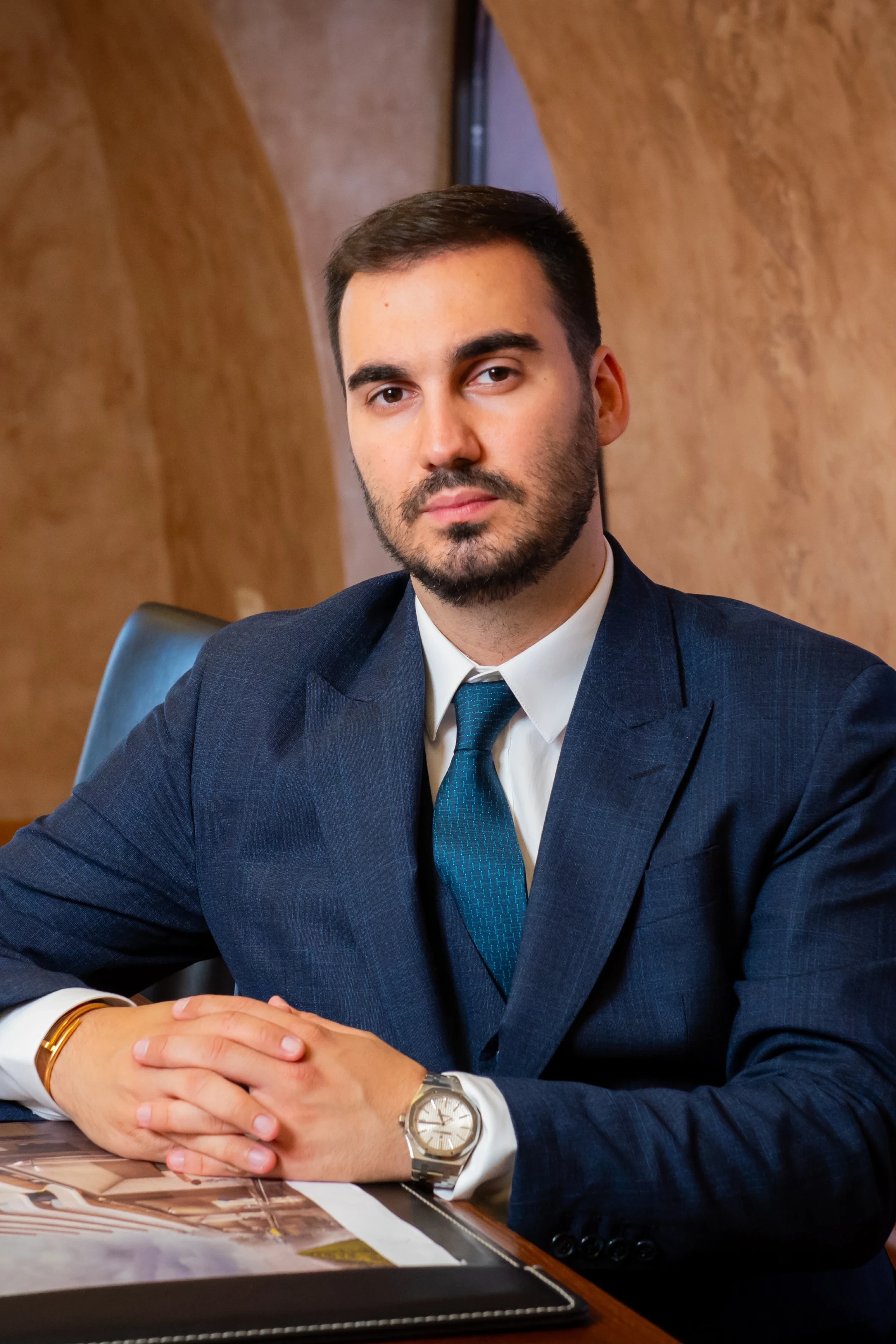
Vladimir Kolev is the CEO of TV Property and an entrepreneur in the field of residential and investment properties. He graduated in Economics and Mathematics from the University of Bath and Sofia University and has practical experience in the development of distinguished residential projects in Sofia and along the Black Sea coast.