 bg
bg
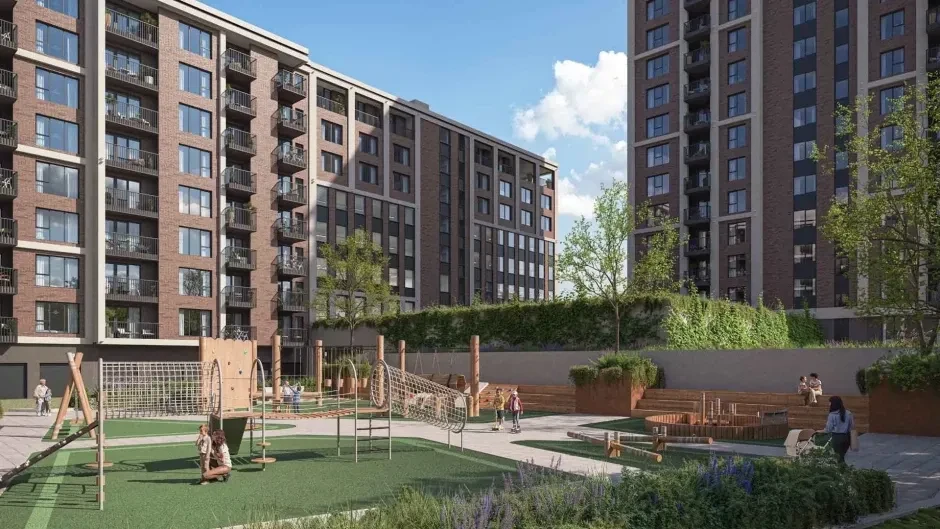
What Makes a Property Truly Luxury - Beyond the Price Per Square Metre
Price alone is not a criterion. In Sofia and Burgas there are apartments priced above 3,000 euros per sq.m where neither the location nor the execution justifies the label. A genuine luxury property combines three inseparable elements: a location that cannot be replicated; construction materials and technologies that minimise running costs; and an architectural concept that holds its value over time.
Additional indicators to examine include: energy class of at least A+; the quality of windows and thermal insulation; the standard of common areas; building management; and the track record of the developer behind the project. Each of these affects the real value at the point of sale or rental.
Luxury vs. Expensive - The Practical Difference
A luxury property by definition includes: underground parking or a garage; controlled access; a lift with adequate capacity; sound insulation between apartments; and maintenance systems with predictable costs. An expensive property may lack one or more of these features while offering an attractive visual appearance or a central location.
Location - The One Factor a Developer Cannot Add
In the property market there are three types of location: those where value grows over time; those where it remains stable; and those where it falls. The central districts of Sofia - particularly the areas around Vitosha Boulevard, Pirotska Street and Oborishte - fall into the first category. Similarly, coastal neighbourhoods in Burgas such as Izgrev with direct access to the seafront and the city centre infrastructure show sustained price growth.
Buying a luxury apartment in a low-prestige location simply because it is cheaper is a classic compromise that is difficult to exit without a loss. Luxury properties retain and increase their value precisely because location is a finite resource.
Transport Accessibility and the Walkable Environment
High-value projects in the centres of Sofia and Burgas offer walkable access to essential services - government offices, medical centres, restaurants, leisure areas. This is not merely a comfort issue; it is a liquidity issue: the less dependent a resident is on a car, the broader the pool of potential buyers and tenants at the point of sale.
Construction and Materials - How to Read a Project
The construction quality of new developments is assessed at several levels. At the design level: whether a genuine architectural concept has been applied or a standard floor plan used. At the execution level: who the main contractors are and whether the developer works with them consistently. At the materials level: the specification of the windows, thermal insulation, waterproofing and roof type.
Luxury projects invariably include triple glazing or at minimum double glazing with low-emission coating, a mechanical ventilation system with heat recovery, and floor finishes that absorb impact noise. Check the specification of the plaster and filler coatings - the difference between "finished" and "luxury finished" lies in thicknesses and technologies.
Energy Class and Realistic Heating Costs
A building with energy class A or A+ is not just a marketing claim - it means concretely lower annual heating and cooling costs. With properly executed thermal insulation, triple glazing and heat-recovery ventilation, heating costs for a 100 sq.m apartment can stay below 50 euros per month even in a cold winter. This is an argument with which a luxury property pays back not only at the point of sale but in everyday use.
The Developer Behind the Project - Reputation Measured in Completed Buildings
When buying off-plan or during construction, the reputation of the developer is arguably the most important factor. It means: financial stability to see the project through; the experience to handle unforeseen situations; and a willingness to stand behind quality after handover. A developer with over 30 years of completed projects represents a different risk profile from a start-up with attractive renders.
Visit completed projects. See them in person. Talk to residents - not the agent, but actual owners. This is the only reliable form of due diligence when buying from a developer.
Penthouse, Multi-Room or Studio - Which Delivers Better Returns
The choice of apartment type within a luxury project depends on the objective: personal use or investment. If the goal is rental investment, one-bedroom apartments generate higher returns on invested capital due to their lower price and a wider pool of potential tenants. Multi-room units and penthouses let more slowly, but at the point of sale they deliver a higher absolute value gain.
In central Sofia, a luxury one-bedroom apartment of 70-80 sq.m lets at between 800 and 1,200 euros per month (2025-2026 data). Annual rental yield net of costs reaches between 4.5% and 6%, which is competitive against most alternative instruments at the same risk profile.
Maintenance Costs in a Luxury Gated Complex
A luxury property also carries higher maintenance fees. In a well-managed complex these cover: security, lift servicing, cleaning of common areas, grounds maintenance and a technical reserve. The normal range for a luxury complex in Sofia is between 1.30 and 2.60 euros per sq.m per month. For a 100 sq.m apartment that means roughly 130-260 euros per month.
Before purchase check whether a management protocol or internal regulations document has been prepared in advance by the developer. The absence of such a document signals that building management has not been planned seriously.
Luxury Projects in Central Sofia - Pirotska Street
Pirotska Street is among the few addresses in Sofia where new construction meets historical city centre and walkable access. Pirotska Residence is a representative project with precisely this positioning - high-quality construction with access to central administrative services, commercial areas and transport links. Apartments are available with underground parking, sold directly by the developer without agency commission.
Apartment types: one-bedroom, two-bedroom and multi-room units with varied aspects. The sale is handled directly by the developer, without an intermediary. Buying from a developer is a considerably more transparent process than the secondary market - the preliminary contract is standardised, and the deposit terms and payment schedule are clearly set out.
Luxury Projects in Burgas - Magnolia Residence and Arena Izgrev
In Burgas, luxury new construction is concentrated in the Izgrev neighbourhood and the central parts of the city. Magnolia Residence is a project focused on a coastal atmosphere, quality materials and well-planned floor layouts. It includes underground parking and is one of the few projects in Burgas backed by a proven developer.
For a fully completed building with Act 16, Arena Izgrev offers apartments, parking spaces and a penthouse. The advantage of a fully completed building is that the buyer sees exactly what they are purchasing - no construction risk, no waiting.
Long-Term Value - Why Luxury Properties in Bulgaria Stand the Test of Time
Between 2015 and 2025, quality new construction in central Sofia recorded significant price growth, with the exact rate varying by location, purchase stage and the specific characteristics of each property. The reasons are two: constrained supply in desirable locations and growing demand from buyers with incomes above the national average.
If you are considering a luxury property as a long-term investment, the deciding factors are: location, the developer, the construction standard and post-handover building management. The price per square metre is a consequence of these four factors - not their cause. Read the real maintenance costs of a gated complex and what Act 14, 15 and 16 mean when buying off-plan - the two topics most frequently overlooked by luxury property buyers.
Emerging Trends in Luxury Construction in Bulgaria
Among the leading trends in luxury properties in Bulgaria for 2025-2026 are: smart home management systems (lighting, climate control and security via smartphone); electric vehicle charging stations in the underground car park; and personalised fit-out, where the buyer selects materials and kitchen configuration within a pre-agreed budget. These features are not marketing - they are a response to buyer requirements.
In high-end new construction in Sofia and Burgas, buyers no longer accept imposed solutions. Personalisation, even within technical constraints, is a competitive advantage and a prerequisite for faster sale. Projects without this option are losing ground to competitors with a more flexible approach.
Buying a Luxury Property - Mistakes to Avoid
The first common mistake is committing to a purchase based solely on renders and glossy brochures, without visiting completed buildings by the same developer. The second is ignoring maintenance fees when calculating total investment cost. The third is overlooking the management agreement - who will run the building, on what tariff, and what powers the owners association holds.
The fourth mistake - and potentially the most expensive - is buying a luxury apartment without a clear investment rationale. Before any purchase answer three questions: Will I live there? Will I let it? Do I plan to sell within a defined period? The answers determine which apartment type, in which location and at what price represents a sound purchase.
Managing a Luxury Property as a Rental
When renting out a luxury apartment, tenants have significantly higher expectations regarding maintenance and response to issues. Plan for: an annual property inspection; a detailed handover-and-return protocol; and a contingency fund of at least 5% of annual rental income for ongoing repairs.
Rental income for individuals in Bulgaria is taxed at 10%. The taxable base is the net income after a 10% standard deductible expense - giving an effective rate of 9% of gross rent. For luxury properties with high rental income, a consultation with a tax adviser is an investment, not a cost.
Comparison: Sofia vs. Burgas for a Luxury Investment
The comparison between luxury properties in Sofia and those in Burgas depends entirely on the investment objective. For maximum rental income, Sofia wins: a higher-quality tenant pool, a 12-month rental market and a higher rental ceiling. For price appreciation, the two markets are broadly comparable - Sofia with a more stable trajectory, Burgas with a more pronounced seasonal component.
For an investment horizon exceeding ten years with a resale objective, Sofia offers better liquidity due to its larger secondary market. Burgas offers a better entry price point - at comparable specifications the difference is 30-50%. The optimal strategy for larger capital is diversification: one property in central Sofia and one in Izgrev in Burgas - the two markets complement rather than compete with each other.

Vladimir Kolev is the CEO of TV Property and an entrepreneur in the field of residential and investment properties. He graduated in Economics and Mathematics from the University of Bath and Sofia University and has practical experience in the development of distinguished residential projects in Sofia and along the Black Sea coast.