 bg
bg
In brief
Swapping an old apartment for new construction is calmer when you buy an off-plan property with staged payments: the down payment is covered by savings, while the main part of the price comes from the sale of your current home, planned early enough before the building is completed (for example 6-12 months, depending on the schedule in the contract). This way you can reduce the likelihood of needing bridge financing and stay in the old home until a later stage of the new purchase.
Why do owners swap an old home for new construction?
The main motives are three: lower monthly costs, better functionality, and ageing buildings whose installations and structural components are approaching the end of their useful life. Panel and old brick homes have outdated installations, poor insulation and common areas no one invests in.
New construction solves exactly these problems: energy class A, new plumbing and electrical systems, lifts, parking spaces and warranty periods. When selling an older-generation property and buying a new one, the owner often changes neighbourhood too - to an area with better infrastructure or closer to work and school.
There is a market motive as well: the price gap between an old and a new home in the same area has rarely been more justified. Buyers of the older properties seek them out for their location and price, which keeps them liquid and makes the swap feasible.
In what order should you arrange the two deals?
There is no universal order - the right one depends on whether you are buying a completed property or an off-plan one, and on your available savings. Consider the three scenarios and choose according to your situation.
First sell, then buy
This order gives certainty in the budget: you know exactly what you have to work with. The risk is the interim period - if you do not quickly find a new property, you end up renting with a double move. It suits a hot market for the older homes and a large supply of new ones.
First buy, then sell
The reverse order guarantees the new home but requires financing two homes at once. It works when you have enough savings for the down payments, or the bank accepts the old property as collateral. The risk is a forced sale of the old home below market price if the deadlines squeeze you.
In parallel: buying off-plan
The third scenario: you buy an off-plan apartment with instalments staged by construction phase and sell the old property as the building nears completion. Building a residential block takes years, not months - the specific schedule is in the contract with the developer - and it is exactly this time that lets you sell calmly, at a good price, and live in the old home until you get the keys to the new one. The scheme is favoured by families who do not have the budget for two homes at once, but it requires a realistic schedule for both deals.
How do the construction stages work in your favour?
Staged payments spread the price over time and can help synchronise the two deals, but they do not guarantee that external financing will not be needed. The typical scheme with a developer includes a payment on the preliminary contract, interim payments at key stages and the balance on completion.
How exactly the payments are tied to Act 14, Act 15 and Act 16 we described in detail in the article on the payment plan for an off-plan apartment. The practical rule: plan the sale of the old property so the funds arrive before the largest payment - usually the one around completion of the rough construction or before commissioning.
The significance of the three acts for the buyer's security - what each certifies and what checks it allows - is a separate topic, covered in the guide to Act 14, Act 15 and Act 16.
How long does selling an old apartment take in 2026?
The market in 2026 is slower than in previous years: buyers compare more, there are more viewings, and negotiations run longer. There is no universal timeframe - it depends on the price, the area and the condition - but from practical observation, the period from listing the property to completing the sale before a notary, with correct pricing, is measured in months, not weeks. Plan for that order of magnitude and be glad if it goes faster.
Three factors speed up a sale: a realistic price against deals actually closed in the area, a clean set of documents, and a home prepared for viewing. Overpriced properties sit for months and end up selling at a bigger discount than the one first refused.
Build in a buffer: if the main payment for the new property is 12 months away, start the sale no later than 6-8 months before the deadline.
What taxes do you owe on the sale of your current home?
Under the rules of the Personal Income Tax Act published by the NRA, the income from the sale of one residential property is exempt if more than three years have passed between acquisition and sale, as is the income from up to two properties if more than five years have passed since their acquisition. Check the current version of the law or consult an accountant - the assessment depends on the specific case, including how the property was acquired.
If you do not fall under the exemption, you owe tax on the difference between the sale price and the purchase price, reduced by statutorily recognised expenses. Current information is maintained by the National Revenue Agency. Plan this expense in advance - it directly affects the budget for the new purchase.
How to value your old property realistically?
A realistic price is based on deals actually closed for similar properties in the area, not on portal listings. Listed prices as a rule sit above what is really agreed - the gap only emerges in negotiation - while your property is compared with what the buyer can actually get for the same money.
• Check the prices at which comparable recent transactions in the neighbourhood were completed, for a similar size and floor.
• Assess the condition soberly: the market pays differently for a home needing renovation, in average shape, or refurbished.
• Get two or three independent valuations - from a broker, a bank valuer, or a developer who knows the area.
• Set a floor below which you will not go, before negotiations begin.
Bear in mind that the buyer of your old home is often in a "sell and buy" chain too - flexibility on the handover date can be worth more than a few thousand euro on the price.
What to do if the deadlines do not line up?
A mismatch of deadlines has three workable solutions: bridge financing, negotiating with the developer, and an interim rental. Choose according to the cost of each.
A bridge loan or a mortgage on the old property
Banks offer financing secured against the old property, repaid when it is sold. The solution is quick, but it has a price - interest and fees you should weigh against the loss from a rushed sale. Review several offers and watch the repayment deadlines.
Negotiating the payments with the developer
Reputable developers have flexibility in the payment scheme, especially at an earlier construction stage. If the developer allows a change in the schedule, moving a large payment can reduce the need for short-term bank financing. The arrangement should be agreed in writing before you rely on it - after the preliminary contract is signed, renegotiation is harder.
An interim rental
If you sell early at a good price, a few months of renting are an acceptable price for peace of mind. Add up the total cost - rent, two moves, storage for your belongings - and compare it with the discount you would give on a sale under pressure. Sometimes renting is the cheaper option.
How to prepare the old apartment for sale?
Preparing the home returns the investment many times over - but only if it is the right preparation. The aim is not a renovation but removing the reasons for a buyer to knock down the price.
What is worth doing
Small repairs with a big visual effect give the best return: refreshing the walls in a neutral colour, working switches and sockets, serviced windows, cleaned bathroom grout. Decluttering is free and works hardest - a half-empty home looks bigger and lets the buyer picture their own furniture.
A full refurbishment before sale rarely pays off. Buyers of older homes in the big cities often plan a renovation to their own taste anyway and will not pay the premium for someone else's.
What the viewing decides
The first minutes count out of all proportion: the building's entrance, the smell, the light. Schedule viewings at the time of day with the best light for the home's orientation. Prepare answers to the questions every serious buyer asks: the neighbours, the fees, heating costs, the history of the installations.
When a professional helps
For a property sale in a slower market, a good broker adds real value: access to buyers, filtering the curious from the serious, and running the negotiation without emotion. Compare the broker's fee with the discount you might concede after months without a serious offer, rather than with an imaginary zero-cost scenario.
Which documents do you need for the sale?
A clean set of documents speeds up the deal by weeks and is the seller's free competitive advantage. Prepare them before you post the listing, not after a buyer appears:
• Proof of ownership: the notary deed or other title by which you acquired the property.
• A current tax valuation from the municipality - required for the notarial transaction.
• An encumbrance certificate from the property register - the buyer will request it anyway; obtain it in advance and clear up any surprises.
• A cadastral sketch or scheme of the individual unit.
• Certificates of marital status and consents where the property is jointly owned.
• Documents on a repaid or renegotiated mortgage, if the property was used as collateral.
If there is an active mortgage on the property, the sale is entirely possible - the bank issues a letter with the outstanding balance, which is repaid from the sale price at the transaction itself. Clarify the procedure with your bank in advance, as the timeframes for issuing the documents vary.
Common mistakes when combining the two deals
The costliest mistake is to firmly tie together two deals with uncertain deadlines. Here is what we see most often in practice:
• A signed preliminary purchase contract with short deadlines, before the old property is even listed for sale.
• An overpriced old property that "waits for its buyer" for months, while the payments for the new one draw near.
• No buffer: the whole budget is calculated with no reserve for fees, tax, finishing and furnishing.
• Missed delay clauses in the contract with the developer - what happens to your deadlines if the building runs late.
• A sale with no agreed handover date - you end up without a home before the new one is ready.
Each of these mistakes is avoided by one thing: a realistic schedule, set out in writing in both contracts.
Is there a right season to sell?
The market's seasonality is a weaker factor than the price and condition of the property, but your schedule is more flexible if you know it. Spring and early autumn are traditionally the most active periods: buyers want to close a deal and a renovation before summer or before winter. December and January are the quietest months - listings posted then often sit and "burn out" visually, because buyers see how long they have been up.
The practical takeaway for the "sell and buy" scheme: if the big payment for the new property falls in spring, list the old one at the start of autumn - you catch the active autumn market and, if needed, the spring one too, without running up against the deadline. A property sold without time pressure always takes a better price than one that "has to be sold by March".
And one more observation from practice: buyers of luxury properties and of family homes in good areas do not disappear in any season - at the right price a quality property sells year-round. Seasonality hits the middle and compromise segment hardest.
Three scenarios compared
|
Scenario |
Main advantage |
Main risk |
Suited to |
|
First sell |
a secure budget |
interim rent and a double move |
a hot market for old homes |
|
First buy |
a guaranteed new home |
double financing, sale under pressure |
buyers with solid savings |
|
In parallel, off-plan |
time for a calm sale, less need for a bridge loan |
tying two schedules together |
families without the budget for two homes at once |
How to choose the new property while the old one is selling?
Choosing the new home runs in parallel with the sale - and it has its own specifics when you buy off-plan. Three criteria filter out the projects that work for a "sell and buy" scheme.
The first is the construction stage. The earlier the stage, the better the price and the more time you have for a calm sale of the old property - but the more important the developer's track record becomes. A project at the excavation stage from a builder with no completed buildings is a risk; the same stage with a developer of decades' standing is an opportunity.
The second is the payment scheme. Look for a match between the payments and your schedule: a small deposit, manageable interim payments and the main payment towards the end, when the money from the sale is already available. This is exactly what makes new construction convenient for swapping homes - a completed property requires the whole sum at once.
The third is what you get at handover: the degree of completion, common areas, parking space, energy class. Compare the final price of the ready-to-live-in home, not the price per square metre from the brochure - differences in finishing easily distort the comparison between projects.
What does the process look like with a developer like TV Property?
When buying directly from the developer, the two deals are planned as one: the team aligns the payment scheme with the sale of your current home. TV Property has been building residential blocks in Sofia and Burgas for more than 30 years, and this is one of the most common situations the team works with.
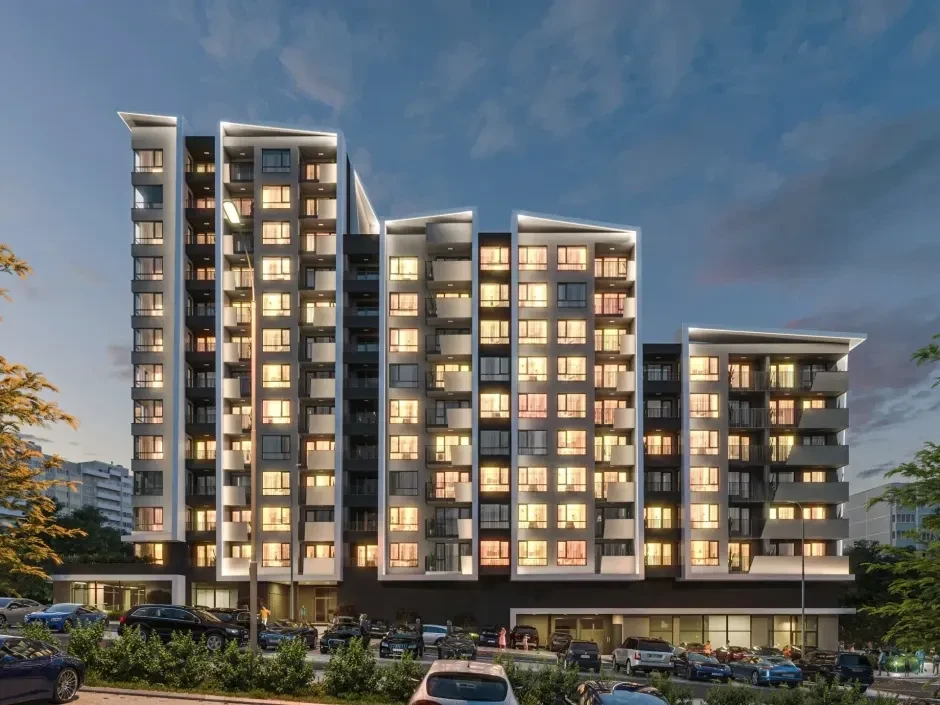
Review the current projects in the two cities - each lists the construction stage, deadlines and payment scheme. If you are considering a home or a property investment by the sea, also see the apartments in Piccadilly Residence in Burgas - a building under construction with staged payments.
The questions sellers ask most often
Can I buy a new home before I sell the old one?
Yes. The options are sufficient funds of your own or financing secured against the existing property. With an off-plan purchase and staged payments, you may need neither the full purchase price upfront nor bridge finance. You must, however, have enough funds for the initial payment and any interim instalments due before the old home is sold.
How long before the building is completed should I list the old property?
Start at least 6-8 months before the payment you will cover with the sale proceeds - this is a planning buffer, not a forecast. In a slower market, as in 2026, the sale itself is measured in months, and on top of that you need time for negotiations and an agreed date to vacate the home.
Do I owe tax on the sale of my only home?
Under the Personal Income Tax Act, the income from the sale of one residential property is exempt after more than three years from acquisition, and up to two properties after more than five years. With a shorter ownership period or more properties, you owe tax on the gain - check the conditions with the NRA or an accountant for the specific case.
What happens if the new building runs late?
A delay is governed by the preliminary contract - which is why the clauses on deadlines, penalties and your right to withdraw are critical. If you have sold the old property, negotiate a longer date to vacate or budget for an interim rental. Choose a developer with a record of buildings completed on time.
Is it better to sell now or wait for prices to rise further?
Waiting brings both effects at once: the old property may appreciate, but the new one appreciates too, usually faster at an early construction stage. For swapping homes, the market moment matters less than the synchronisation of the two deals - you sell and buy in one and the same market.

Vladimir Kolev is the CEO of TV Property and an entrepreneur in the field of residential and investment properties. He graduated in Economics and Mathematics from the University of Bath and Sofia University and has practical experience in the development of distinguished residential projects in Sofia and along the Black Sea coast.